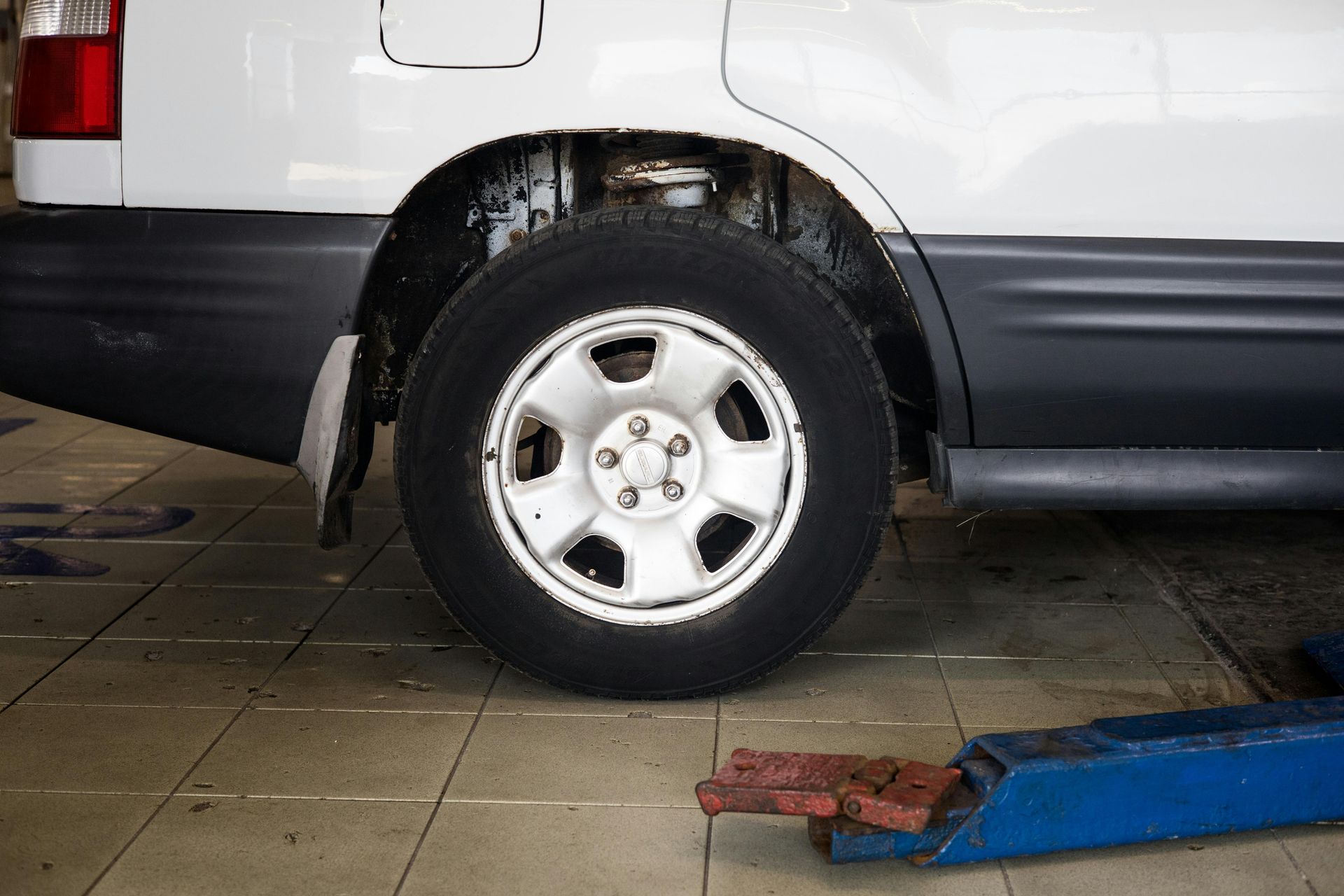
A tire can look decent from a few feet away and still be too old to trust. The tread may have depth left, the sidewall may hold air, and the vehicle may seem to drive normally. That does not always mean the tire is still in good condition.
Tires age due to time, heat, sunlight, moisture, storage conditions, road use, and changes in air pressure. The rubber slowly hardens and loses flexibility. Once that happens, the tire may not grip, flex, or withstand heat as well as it did when it was newer. Age is one reason tread depth should never be the only thing drivers check.
Tread Depth Does Not Tell The Whole Story
Tread depth measures how much rubber is left on the surface that contacts the road. It is important, but it is only one part of tire condition. A tire can have acceptable tread and still have aged rubber, sidewall cracking, internal weakness, or damage from years of heat cycles.
Older tires can also lose grip in wet weather, even before they look badly worn. The rubber compound changes over time. That can affect braking, cornering, and traction, especially on rain-soaked roads. A good-looking tread does not always mean the tire can still perform well.
How Tire Age Is Found
Every tire has a DOT date code on the sidewall. The last four digits show the week and year the tire was made. For example, a code ending in 2421 means the tire was manufactured in the 24th week of 2021.
The date code is useful because tire age starts from the manufacturing date, not the date you bought the tire. A tire that sat in storage for a long time before installation may already be older than you think. That is why checking the actual date code matters more than relying on memory.
When Tire Age Becomes A Concern
There is no single age that fits every tire, driver, or vehicle. Climate, storage, tire quality, inflation, mileage, and road conditions all play a role. Still, once tires are several years old, they should be examined more carefully during regular maintenance.
By around six years of age, the thread deserves serious attention, even if the thread looks fine. Some tires may still be usable with careful inspection, while others may already show cracking or hardening. Tires that are close to ten years old should be treated with much more caution. At that age, replacement is usually the safer plan, even if the tread has not worn out.
Cracks And Dry Rot Are Warning Signs
Cracks in the sidewall or between tread blocks are signs that the rubber is aging. Small surface cracks may seem harmless at first, but they show the tire is losing flexibility. As cracking spreads, the tire becomes more vulnerable to air loss, separation, and failure under heat or load.
Dry rot can appear as tiny lines, rough texture, faded rubber, or deeper splits. It is common for vehicles that sit outside, are driven rarely, or spend years exposed to the sun and weather. A tire does not need to be bald to be unsafe. Cracked rubber is enough reason to have it checked.
Low Mileage Tires Can Still Age Out
Some drivers assume tires are fine because the vehicle is not driven much. That can be true for mileage, but not for age. Tires on low-mileage vehicles still sit under weight, lose and regain air pressure, face temperature changes, and age from exposure.
This is common with trailers, spare vehicles, weekend cars, and older vehicles used for short local trips. The tread may look almost new because the tire has not rolled many miles. The rubber can still be old, stiff, or cracked. A tire that sits for years is not automatically safer than one that's driven regularly.
Spare Tires Should Be Checked Too
Spare tires are easy to forget. They may sit in the trunk, under the vehicle, or on the rear door for years without being used. Because they are out of sight, they are often badly aged by the time they are needed.
A spare tire should be checked for age, pressure, cracking, and overall condition. An old spare with low air or dry rot can leave you stranded again after a flat. If your vehicle has a temporary spare, it should also be used only as directed, not treated like a normal tire.
Signs An Older Tire Needs Replacement
Age-related tire problems can show up in several ways. Watch for signs like these:
- Sidewall cracks
- Cracks between tread blocks
- Bulges or bubbles
- Vibration at speed
- Air pressure loss
- Hard or faded rubber
- Uneven tread wear
- Tires older than the recommended service range
These signs do not always appear together. One serious clue can be enough to make replacement the safer choice.
Get Tire Replacement In La Plata, MD, With La Plata Tire Center
If your tires still have tread but are several years old, cracked, losing air, or making the vehicle feel less stable, La Plata Tire Center in La Plata, MD, can check the tire age, tread, sidewalls, and overall condition.
For tire inspection and replacement guidance before old rubber becomes a road problem,
contact us to schedule an appointment.